


Why Choose a Land Rover Over a BMW SUV?
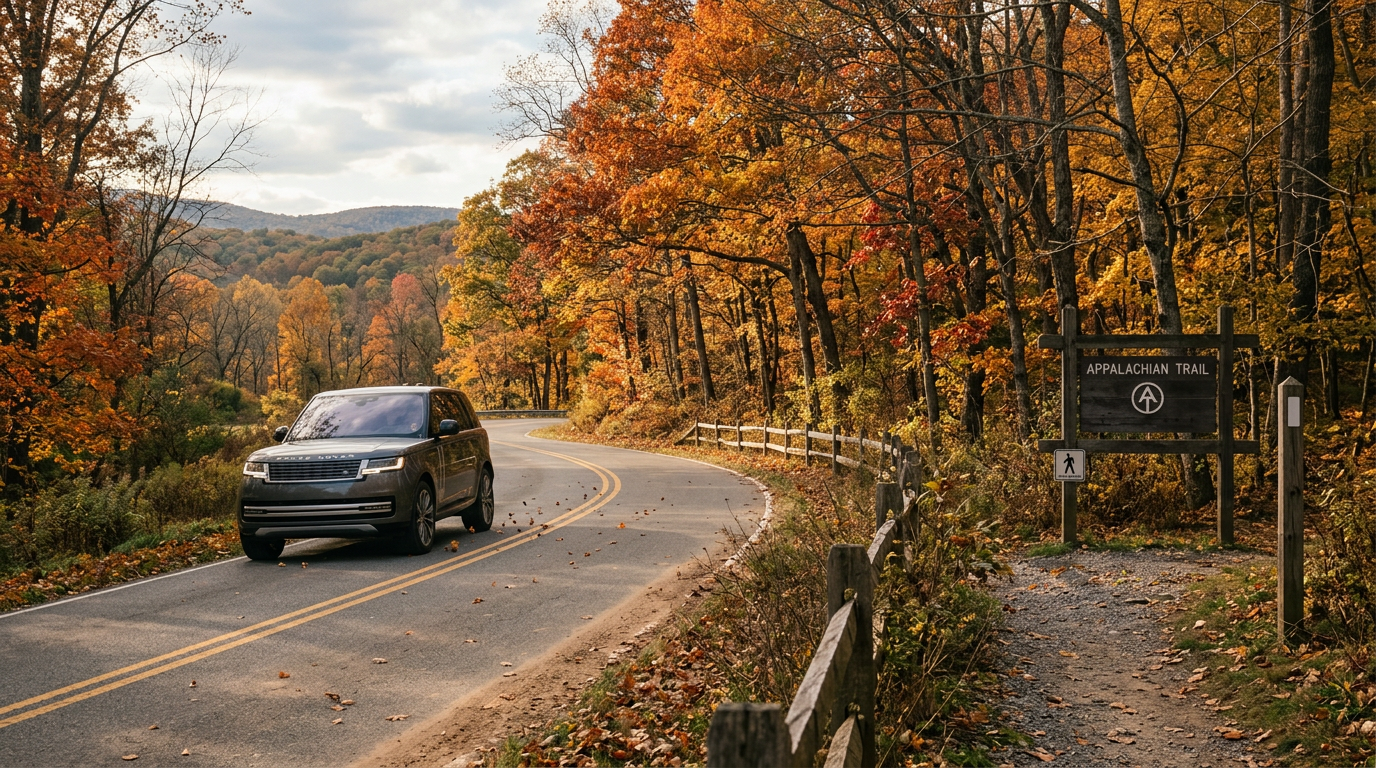
Land Rover SUVs offer superior off-road capability, higher maximum towing capacities up to 8,200 pounds, standard full-time all-wheel drive, and bespoke interior luxury compared to BMW SUVs, which offer a road-focused driving experience. While BMW vehicles emphasize highway agility, Land Rover models blend all-terrain capability through Terrain Response technology with refined cabin comfort.
Drivers deciding between these two respected European luxury marques often weigh track-inspired performance against true all-terrain capability. BMW builds dynamic crossovers tuned for athletic pavement driving, but Land Rover engineers vehicles from the ground up to conquer demanding weather and off-road trails while surrounding occupants in quiet sophistication. With standard electronic air suspension across flagship models, superior deep-water wading ability, and higher maximum trailer tow ratings, a Land Rover provides a broader spectrum of luxury performance.
Inside the cabin, Land Rover emphasizes British luxury interior craftsmanship, featuring sustainable non-leather wool upholstery options, semi-aniline leather seating, and intuitive infotainment suite integration. To experience this unmatched combination of power and sophistication in person, visit our showroom located on Tilghman Street or speak directly with our team by giving us a call at (610) 841-5700.
Table of Contents
- How Do Land Rover Terrain Response Systems Compare to BMW Drive Modes?
- Which SUV Offers a Higher Driving Position and Superior Towing Capacity: Range Rover Sport or BMW X5?
- How Does Rear Passenger Legroom Compare Between Range Rover LWB and BMW X7?
- How Do Depreciation and Long-Term Maintenance Costs Compare Between Land Rover and BMW?
- Common Buyer Questions: Choosing Land Rover Over BMW SUVs
- Elevate Your Journey: Experience Land Rover Capability
How Do Land Rover Terrain Response Systems Compare to BMW Drive Modes?
Land Rover Terrain Response 2 automatically monitors surface conditions and actively recalibrates engine mapping, transmission shift points, center differential locking, and air suspension height to maintain traction across mud, gravel, snow, sand, and rock. In contrast, BMW Driving Experience Control modes primarily alter throttle sensitivity, steering weight, and damper firmness for paved roads, requiring separate add-on packages for basic loose-surface traction.
While BMW drive modes focus on tailored pavement dynamics like Comfort, Sport, and Eco Pro, Land Rover’s system offers specialized surface settings including Mud & Ruts, Sand, Grass/Gravel/Snow, and Rock Crawl. In Terrain Response 2, the system’s Auto mode continually samples sensor data from all four wheels to switch surface programs automatically, adjusting differential lock torque before wheel slip occurs. Additional trail technologies like All-Terrain Progress Control function as low-speed off-road cruise control, managing throttle and braking on steep gradients so drivers can focus entirely on steering.
Ground clearance further distinguishes the two systems. A Land Rover Range Rover equipped with electronic air suspension reaches up to 12 inches of ground clearance in off-road mode and provides 35 inches of wading depth. BMW X models sit lower to the ground at roughly 9 inches of maximum clearance and lack dedicated deep-water body sealing. Suburban commuters driving around Wyomissing during severe winter snowstorms benefit from Terrain Response 2 continuously optimizing power transfer across icy intersections without manual driver intervention.
Powertrain performance complements this electronic traction management. The 2026 Land Rover Range Rover 3.0 SE SWB delivers 395 hp and 406 lb-ft of torque from its turbocharged inline-six, while the 4.4 Autobiography SWB puts out 523 hp and 553 lb-ft of torque from its twin-turbo V-8 engine. Both engines pair with an automatic 8-speed transmission and standard All-wheel drive to ensure smooth, immediate throttle response across any surface.
To experience how these drive modes perform firsthand, shoppers can easily schedule a test drive online or explore our pre-owned SUV inventory to discover full-time four-wheel drive capability.
Engine & Performance
Powertrain specs by trim
| Feature | 3.0 PHEV Autobiography | 3.0 PHEV SE SWB | 3.0 SE LWB 7 | 3.0 SE SWB | 4.4 Autobiography LWB 5 | 4.4 Autobiography LWB 7 |
|---|---|---|---|---|---|---|
| Engine | 3L | 3L | 3L | 3L | 4.4L | 4.4L |
| Horsepower | 543 hp | 543 hp | 395 hp | 395 hp | 523 hp | 523 hp |
| Torque | 590 lb-ft | 590 lb-ft | 406 lb-ft | 406 lb-ft | 553 lb-ft | 553 lb-ft |
| Transmission | automatic 8-speed | automatic 8-speed | automatic 8-speed | automatic 8-speed | automatic 8-speed | automatic 8-speed |
| Drivetrain | All-wheel drive | All-wheel drive | All-wheel drive | All-wheel drive | All-wheel drive | All-wheel drive |
Engine & Performance (continued)
| Feature | 4.4 Autobiography SWB | 4.4 SE LWB 7 | 4.4 SE SWB | 4.4 SV Black LWB | 4.4 SV Black SWB | 4.4 SV LWB |
|---|---|---|---|---|---|---|
| Engine | 4.4L | 4.4L | 4.4L | 4.4L | 4.4L | 4.4L |
| Horsepower | 523 hp | 523 hp | 523 hp | 607 hp | 607 hp | 607 hp |
| Torque | 553 lb-ft | 553 lb-ft | 553 lb-ft | 553 lb-ft | 553 lb-ft | 553 lb-ft |
| Transmission | automatic 8-speed | automatic 8-speed | automatic 8-speed | automatic 8-speed | automatic 8-speed | automatic 8-speed |
| Drivetrain | All-wheel drive | All-wheel drive | All-wheel drive | All-wheel drive | All-wheel drive | All-wheel drive |
Engine & Performance (continued)
| Feature | 4.4 SV SWB |
|---|---|
| Engine | 4.4L |
| Horsepower | 607 hp |
| Torque | 553 lb-ft |
| Transmission | automatic 8-speed |
| Drivetrain | All-wheel drive |
Which SUV Offers a Higher Driving Position and Superior Towing Capacity: Range Rover Sport or BMW X5?
The Range Rover Sport provides a taller, commanding driving position with greater forward visibility and a higher maximum tow rating of 7,716 pounds, whereas the BMW X5 offers a lower, car-like seating position and a maximum tow rating of 7,200 pounds. Standard height-adjustable electronic air suspension in the Range Rover Sport raises ride height for trail obstacles while lowering automatically for effortless entry and cargo loading.
Land Rover’s signature Command Driving Position elevates the driver seat relative to the dashboard and beltline, reducing eye strain and offering a clear view over the front hood corners. This elevated view gives drivers superior spatial awareness when parking in tight spots or maneuvering around trail hazards. In comparison, the BMW X5 places driver seating lower inside the cabin to create a cockpit feel oriented toward sport sedan ergonomics.
When hauling recreational equipment, Land Rover SUVs lead the segment in structural towing capacity. When properly equipped with factory hitch receiver hardware, the Range Rover Sport handles up to 7,716 pounds, while the Land Rover Defender boasts an 8,200-pound maximum tow capacity. The BMW X5 tops out at 7,200 pounds, leaving less reserve capacity when pulling large enclosed trailers, horse trailers, or camper rigs.
- Maximum Towing Capacity: Range Rover Sport reaches 7,716 lbs; Land Rover Defender reaches 8,200 lbs; BMW X5 maxes out at 7,200 lbs.
- Suspension Versatility: Standard height-adjustable electronic air suspension in the Range Rover Sport vs. optional rear air springs on select BMW X5 trims.
- Driver Visibility: Land Rover Command Driving Position provides extended sightlines over hood and perimeter obstacles.
Drivers launching personal watercraft along the Delaware River waterfront in Easton rely on the Range Rover Sport model’s low-range gearing and self-leveling air suspension to pull heavy loads up slippery boat ramps with confidence.
Buyers looking to upgrade their trail and towing capabilities can view our current new vehicle inventory or examine our certified pre-owned inventory to find a model equipped for heavy hauling.
Fuel Economy
Fuel economy and range by trim
| Trim | MPG | EV range | Battery (kWh) |
|---|---|---|---|
| 3.0 PHEV Autobiography | — city / — hwy / 21 combined | 56 mi | 38.2 |
| 3.0 PHEV SE SWB | — city / — hwy / 21 combined | 56 mi | 38.2 |
| 3.0 SE LWB 7 | 19 city / 24 hwy / 21 combined | — | — |
| 3.0 SE SWB | 19 city / 24 hwy / 21 combined | — | — |
| 4.4 Autobiography LWB 5 | 16 city / 22 hwy / 18 combined | — | — |
| 4.4 Autobiography LWB 7 | 16 city / 22 hwy / 18 combined | — | — |
| 4.4 Autobiography SWB | 16 city / 23 hwy / 19 combined | — | — |
| 4.4 SE LWB 7 | 16 city / 22 hwy / 18 combined | — | — |
| 4.4 SE SWB | 16 city / 23 hwy / 19 combined | — | — |
| 4.4 SV Black LWB | 16 city / 22 hwy / 18 combined | — | — |
| 4.4 SV Black SWB | 16 city / 23 hwy / 18 combined | — | — |
| 4.4 SV LWB | 16 city / 22 hwy / 18 combined | — | — |
| 4.4 SV SWB | 16 city / 23 hwy / 18 combined | — | — |
Dimensions & Capacity
Capacity and dimensions by trim
| Feature | 3.0 PHEV Autobiography | 3.0 PHEV SE SWB | 3.0 SE LWB 7 | 3.0 SE SWB | 4.4 Autobiography LWB 5 | 4.4 Autobiography LWB 7 |
|---|---|---|---|---|---|---|
| Seating | 5 | 5 | 7 | 5 | 5 | 7 |
| Cargo | 28.3 cu ft | 28.3 cu ft | 12.1 cu ft | 40.7 cu ft | 40.9 cu ft | 12.1 cu ft |
| Curb weight | 6,025 lbs | 6,025 lbs | 5,600 lbs | 5,240 lbs | 5,800 lbs | 6,025 lbs |
| Towing | 6,613 lbs | 6,613 lbs | 7,715 lbs | 7,715 lbs | 8,200 lbs | 8,200 lbs |
| Payload | 1,645 lbs | 1,645 lbs | 1,850 lbs | 2,145 lbs | 1,695 lbs | 1,645 lbs |
Dimensions & Capacity (continued)
| Feature | 4.4 Autobiography SWB | 4.4 SE LWB 7 | 4.4 SE SWB | 4.4 SV Black LWB | 4.4 SV Black SWB | 4.4 SV LWB |
|---|---|---|---|---|---|---|
| Seating | 5 | 7 | 5 | 5 | 5 | 5 |
| Cargo | 40.7 cu ft | 12.1 cu ft | 40.7 cu ft | 24.5 cu ft | 24.5 cu ft | 24.5 cu ft |
| Curb weight | 5,530 lbs | 6,025 lbs | 5,530 lbs | 5,970 lbs | 5,985 lbs | 5,970 lbs |
| Towing | 8,200 lbs | 8,200 lbs | 8,200 lbs | 8,200 lbs | 8,200 lbs | 8,200 lbs |
| Payload | 1,920 lbs | 1,645 lbs | 1,920 lbs | 1,525 lbs | 1,465 lbs | 1,525 lbs |
Dimensions & Capacity (continued)
| Feature | 4.4 SV SWB |
|---|---|
| Seating | 5 |
| Cargo | 24.5 cu ft |
| Curb weight | 5,985 lbs |
| Towing | 8,200 lbs |
| Payload | 1,465 lbs |
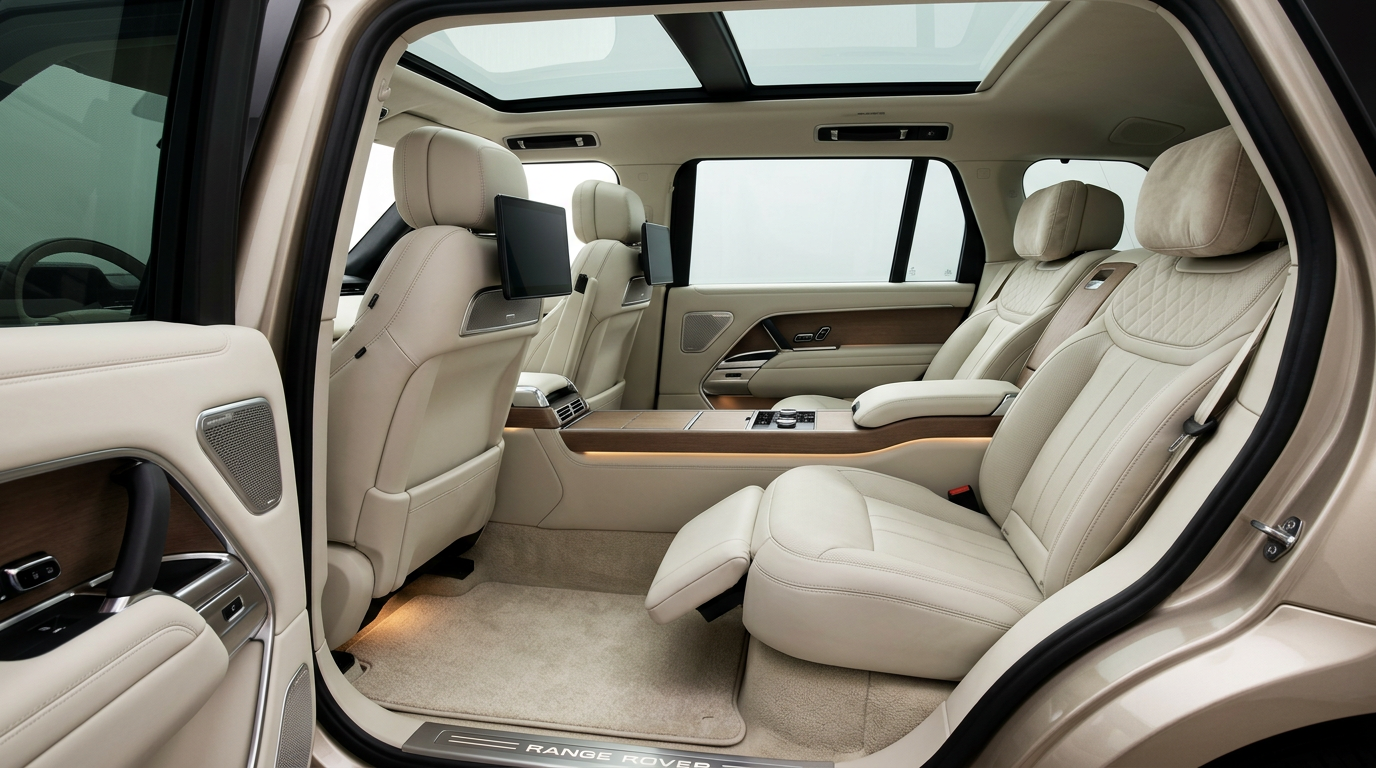
How Does Rear Passenger Legroom Compare Between Range Rover LWB and BMW X7?
The Range Rover Long Wheelbase (LWB) delivers 40 inches of second-row legroom and available Executive Class rear seating, surpassing the BMW X7 which provides 38 inches of second-row legroom. While the BMW X7 prioritizes standard three-row passenger capacity, the Range Rover LWB optimizes rear-cabin luxury with power-deployable footrests, hot stone massage programs, and individual climate control zones.
The difference in cabin philosophy centers on individual passenger comfort versus total occupant count. The BMW X7 comes standard with a third-row bench to accommodate up to seven passengers, which distributes interior volume across three narrower seating rows. The Range Rover LWB uses its extended wheelbase to maximize comfort for second-row passengers, creating a limousine-like executive lounge experience.
With Executive Class Seating selected on the Range Rover LWB, the center rear seat folds down at the touch of a button to reveal a powered center console with wireless smartphone charging, deployed cup holders, and a touchscreen controller for rear climate and audio settings. Optional rear-seat entertainment displays measure 13 inches, providing individual media streaming for long highway journeys.
- Second-Row Legroom: Range Rover LWB provides 40 inches; BMW X7 provides 38 inches.
- Seating Layout Focus: Range Rover LWB offers luxury 4-seat or 5-seat Executive Class arrangements alongside an optional 7-seat layout; BMW X7 defaults to 6-seat or 7-seat family shuttle configurations.
- Rear Cabin Amenities: Available power footrests, seatback massage units, and center console refrigerated compartments in Range Rover LWB.
For shoppers preparing to upgrade to an executive-tier vehicle, our finance team makes it convenient to value your trade-in online before visiting our showroom.
How Do Depreciation and Long-Term Maintenance Costs Compare Between Land Rover and BMW?
Published comparisons estimate a five-year depreciation rate of 50.9% for the Range Rover Sport P360 compared to 58.4% for the BMW X5 xDrive40i, highlighting strong long-term value retention for Land Rover’s luxury flagship. Routine maintenance costs between both European marques remain comparable over full vehicle ownership cycles, backed by Land Rover factory-trained technicians using genuine OEM parts engineered specifically for heavy-duty all-terrain endurance.
Resale performance for Land Rover vehicles is anchored by iconic exterior styling, aluminum-intensive chassis construction, and high market demand for true luxury off-road capability. While BMW crossovers experience typical luxury vehicle depreciation curves tied to tech updates and lease volume, Land Rover SUVs hold sustained appeal among luxury buyers seeking unmatched towing and trail credentials.
Both brands back their new vehicles with a 4-year / 50,000-mile limited and powertrain warranty. Proper maintenance ensures that advanced mild hybrid systems, air suspension valving, and dynamic active differentials maintain factory operating specs. Utilizing authorized retailer service centers protects long-term vehicle health through specialized diagnostic software and factory-backed maintenance schedules.
MSRP pricing may vary by trim and availability. Contact the dealership for the latest Range Rover pricing details:
Keeping your luxury vehicle performing at its peak is straightforward when you schedule service online or order components directly through our genuine parts department.
Pricing
Pricing by trim
| Trim | Base MSRP | Destination charge |
|---|---|---|
| 3.0 PHEV Autobiography | $159,200 | $2,150 |
| 3.0 PHEV SE SWB | $125,900 | $2,150 |
| 3.0 SE LWB 7 | $120,700 | $2,150 |
| 3.0 SE SWB | $113,300 | $2,150 |
| 4.4 Autobiography LWB 5 | $179,500 | $2,150 |
| 4.4 Autobiography LWB 7 | $177,900 | $2,150 |
| 4.4 Autobiography SWB | $174,800 | $2,150 |
| 4.4 SE LWB 7 | $145,400 | $2,150 |
| 4.4 SE SWB | $138,000 | $2,150 |
| 4.4 SV Black LWB | $260,900 | $2,150 |
| 4.4 SV Black SWB | $238,900 | $2,150 |
| 4.4 SV LWB | $245,700 | $2,150 |
| 4.4 SV SWB | $219,500 | $2,150 |
*MSRP and destination charges are subject to change. Contact the dealership for current pricing and availability.
Common Buyer Questions: Choosing Land Rover Over BMW SUVs
Q: Do Land Rover SUVs feature plug-in hybrid powertrains?
Yes, Land Rover offers advanced plug-in hybrid options such as the 3.0 PHEV Autobiography delivering 543 hp and 590 lb-ft of torque alongside an EPA-estimated electric driving range of 21 miles. The system supports DC fast-charging up to 50 kW, enabling an 80% battery recharge in under an hour. In contrast, competing three-row luxury SUVs like the BMW X7 do not offer a plug-in hybrid variant. You can browse our new Range Rover inventory to see available plug-in hybrid models.
Q: How does the wading depth of a Range Rover compare to BMW X models?
The full-size Range Rover provides an official maximum wading depth of 35 inches when equipped with electronic air suspension set to off-road height. BMW does not publish official deep-water wading depth ratings for its X series crossovers, as their lower ground clearance and chassis mounting points are designed primarily for paved road surfaces.
Q: Can the Land Rover Defender seat more passengers than a BMW X5?
Yes, the Land Rover Defender 110 offers optional seating for up to seven passengers, while the extended Land Rover Defender 130 seats up to eight occupants across three full rows. Standard U.S. market listings for the BMW X5 feature a five-passenger seating capacity, giving the Defender lineup far greater passenger flexibility for growing families.
Q: What off-road driver assist features are unique to Land Rover vehicles?
Land Rover vehicles offer specialized trail technology including ClearSight Ground View, which projects a virtual camera view of the ground directly beneath the engine bay onto the central touchscreen. Combined with Adaptive Off-Road Cruise Control, these systems help drivers navigate blind crests and rock obstacles easily, whereas BMW driver assistance systems focus almost exclusively on paved highway lane guidance.
Q: How does Land Rover Roadside Assistance support vehicle owners during emergencies?
Standard Land Rover Roadside Assistance provides 24/7 emergency support throughout the vehicle warranty period, covering flat tire changes, battery jump-starts, fuel delivery, and emergency towing to authorized service centers. Owners can connect with support immediately by calling Land Rover Roadside Assistance: (800) 637-6837. You can also apply for financing online to complete your purchase with full warranty backing.
Elevate Your Journey: Experience Land Rover Capability
Land Rover’s heritage of British craftsmanship and cutting-edge all-terrain technology sets it apart in the luxury SUV market. Whether navigating heavy winter snowstorms or embarking on long-distance highway cruises, Land Rover vehicles deliver confidence across every driving condition. Our team at Land Rover Allentown is ready to assist you in selecting the ideal model tailored to your driving requirements. Visit our dealership located at 5254 Tilghman St, Allentown, PA 18104 to explore our complete luxury lineup, or reach out to our team by calling (610) 841-5700 to schedule your personalized consultation today.
© 2026 Land Rover Allentown. All rights reserved.

0 comment(s) so far on Why Choose a Land Rover Over a BMW SUV?