


Unlock Massive Tax Savings: How SUVs Over 6,000 lbs Can Slash Your Business Expenses
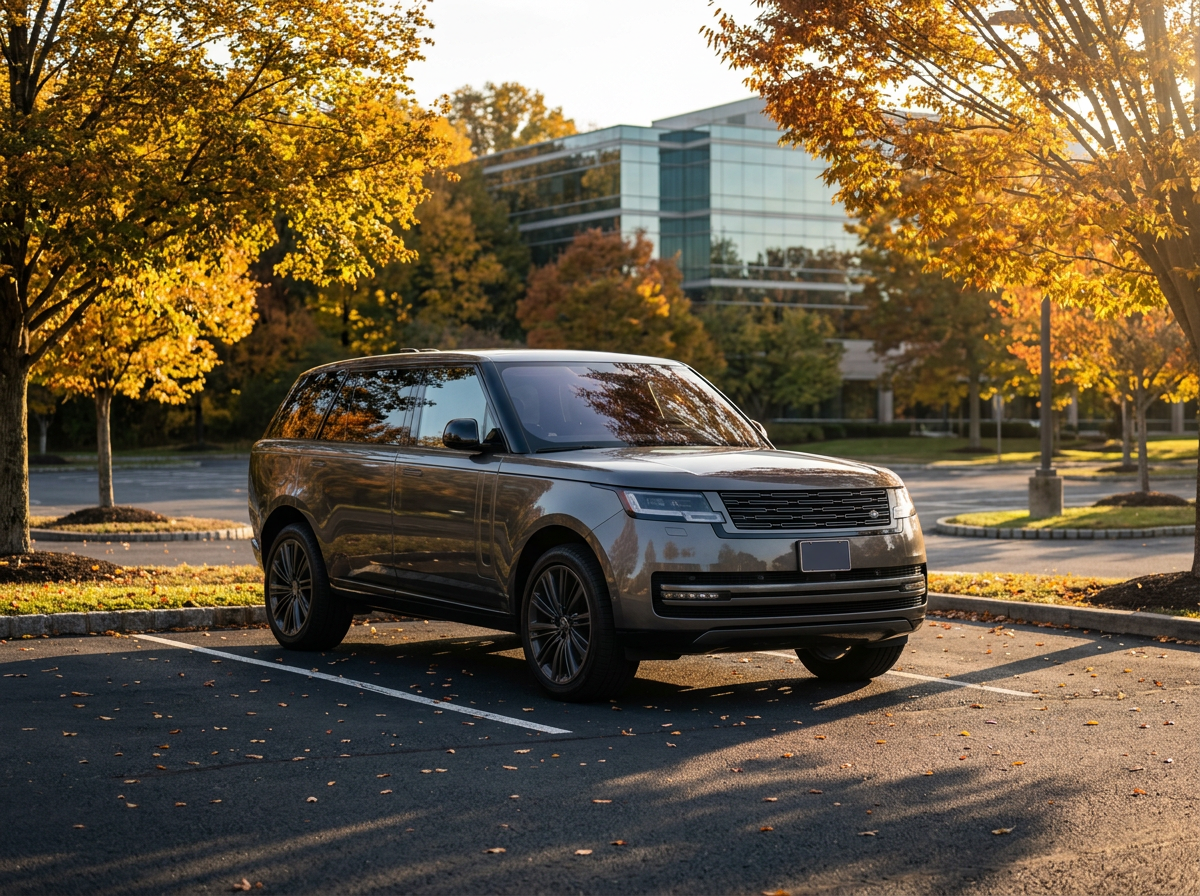
The minimum Gross Vehicle Weight Rating (GVWR) required for full heavy SUV Section 179 tax deduction eligibility is 6,001 pounds. Vehicles meeting or exceeding this threshold are classified by the IRS as heavy passenger vehicles, allowing business owners to deduct a substantial portion of the vehicle’s purchase price during the first year placed in service.
Gross Vehicle Weight Rating represents the maximum operating weight specified by the manufacturer, including the vehicle’s chassis, body, engine, fluids, fuel, accessories, driver, passengers, and cargo combined. It is distinct from curb weight, which measures the vehicle with standard equipment and fluids but without passengers or payload. To confirm eligibility, business owners should check the official safety compliance label located on the driver-side door pillar.
For vehicles rated between 6,001 pounds and 14,000 pounds GVWR, federal tax guidelines set a specific Section 179 expense cap for sport utility vehicles—established at $31,300 for tax year 2025 and $32,000 for tax year 2026. Vehicles falling below the 6,001-pound mark are restricted to standard passenger automobile depreciation limits, which dramatically cap first-year write-offs.
Local business owners commuting along PA-100 or I-78 through Upper Macungie Township frequently utilize heavy luxury SUVs to manage daily enterprise demands while optimizing their annual corporate tax strategy. To inspect vehicle weight labels in person, stop by our Allentown showroom or give our staff a quick call to verify model specifications.
Table of Contents
- Which Land Rover Models Qualify for Section 179 Business Tax Deductions?
- What Is the Minimum Business Use Percentage Required for Section 179 Deductions?
- What Marginal Tax Bracket Generates the Highest Dollar Savings Under Section 179?
- How Does the Land Rover Defender Compare to the Range Rover for Section 179 Write-Offs?
- Common Business Buyer Questions About Land Rover Section 179 Tax Deductions
- Explore Qualifying Land Rover Vehicles
Which Land Rover Models Qualify for Section 179 Business Tax Deductions?
Land Rover models with a Gross Vehicle Weight Rating exceeding 6,000 pounds qualify for heavy vehicle Section 179 tax deductions, including the Range Rover, Range Rover Sport, Land Rover Defender 110, Land Rover Defender 130, and Land Rover Discovery. Compact models like the Land Rover Defender 90 fall below this weight requirement and follow standard passenger car depreciation schedules.
The qualifying vehicles in our lineup offer diverse powertrain options, advanced All-wheel-drive systems, and refined air suspensions engineered for both highway comfort and off-road stability:
- Land Rover Range Rover: Features available 3L inline-6 mild-hybrid options generating 395 hp and 406 lb-ft of torque, or plug-in hybrid variants delivering 543 hp and 590 lb-ft of torque. Top-tier trims offer a 4.4L twin-turbo V8 producing up to 607 hp and 553 lb-ft of torque, all managed by an automatic 8-speed transmission.
- Land Rover Defender 110 & 130: Commercial-ready platforms equipped with seating for up to eight occupants, offering high payload capacities and towing up to 8,200 lbs.
- Land Rover Discovery: A versatile three-row vehicle powered by a 2L engine producing 296 hp or a 3L engine pushing 355 hp, providing flexible interior configurations for equipment and seating.
For executives and business operators in Doylestown balancing corporate commitments with outdoor utility, these qualifying models deliver sophisticated executive transportation alongside full commercial eligibility. You can explore our new Land Rover inventory or examine our pre-owned luxury lineup to evaluate qualifying options for your corporate fleet. Always consult your tax professional as this article is for informational purposes only.
Engine & Performance
Powertrain specs by trim
| Feature | 3.0 PHEV Autobiography | 3.0 PHEV SE SWB | 3.0 SE LWB 7 | 3.0 SE SWB | 4.4 Autobiography LWB 5 | 4.4 Autobiography LWB 7 |
|---|---|---|---|---|---|---|
| Engine | 3L | 3L | 3L | 3L | 4.4L | 4.4L |
| Horsepower | 543 hp | 543 hp | 395 hp | 395 hp | 523 hp | 523 hp |
| Torque | 590 lb-ft | 590 lb-ft | 406 lb-ft | 406 lb-ft | 553 lb-ft | 553 lb-ft |
| Transmission | automatic 8-speed | automatic 8-speed | automatic 8-speed | automatic 8-speed | automatic 8-speed | automatic 8-speed |
| Drivetrain | All-wheel drive | All-wheel drive | All-wheel drive | All-wheel drive | All-wheel drive | All-wheel drive |
Engine & Performance (continued)
| Feature | 4.4 Autobiography SWB | 4.4 SE LWB 7 | 4.4 SE SWB | 4.4 SV Black LWB | 4.4 SV Black SWB | 4.4 SV LWB |
|---|---|---|---|---|---|---|
| Engine | 4.4L | 4.4L | 4.4L | 4.4L | 4.4L | 4.4L |
| Horsepower | 523 hp | 523 hp | 523 hp | 607 hp | 607 hp | 607 hp |
| Torque | 553 lb-ft | 553 lb-ft | 553 lb-ft | 553 lb-ft | 553 lb-ft | 553 lb-ft |
| Transmission | automatic 8-speed | automatic 8-speed | automatic 8-speed | automatic 8-speed | automatic 8-speed | automatic 8-speed |
| Drivetrain | All-wheel drive | All-wheel drive | All-wheel drive | All-wheel drive | All-wheel drive | All-wheel drive |
Engine & Performance (continued)
| Feature | 4.4 SV SWB |
|---|---|
| Engine | 4.4L |
| Horsepower | 607 hp |
| Torque | 553 lb-ft |
| Transmission | automatic 8-speed |
| Drivetrain | All-wheel drive |
What Is the Minimum Business Use Percentage Required for Section 179 Deductions?
The Internal Revenue Service mandates a strict minimum of more than 50% qualified business use in the tax year a vehicle is placed in service to claim a Section 179 deduction. If business usage falls to 50% or below during the initial year or subsequent recovery period, the vehicle fails the qualified business use test, disqualifying it from Section 179 treatment and triggering potential depreciation recapture.
Calculating your allowed deduction requires multiplying the eligible vehicle cost by your exact business use percentage. For example, if a qualifying Land Rover with a $100,000 basis is driven 80% for documented business travel and 20% for personal errands, the allowable expense base for Section 179 calculations is $80,000. Maintaining accurate, contemporaneous mileage logs detailing trip dates, business purpose, mileage driven, and destinations is essential to substantiate business use during an audit.
Both new vehicles and pre-owned models new to your business qualify for Section 179, provided they meet weight and usage thresholds. To evaluate qualifying options, browse our certified pre-owned Land Rover models to find business-ready luxury vehicles with comprehensive warranty coverage.
What Marginal Tax Bracket Generates the Highest Dollar Savings Under Section 179?
Taxpayers in the highest federal marginal income tax brackets, such as 37%, achieve the highest net dollar savings from Section 179 expense write-offs. Because Section 179 reduces taxable business income directly before tax rate calculation, higher tax brackets magnify the cash-flow advantage of the deduction.
Consider a scenario where a qualifying heavy SUV eligible for a $32,000 Section 179 deduction is placed in service for 100% business use:
- At a 37% marginal tax bracket, a $32,000 write-off yields $11,840 in direct federal tax savings.
- At a 24% marginal tax bracket, the same $32,000 write-off yields $7,680 in federal tax savings.
- At a 12% marginal tax bracket, the deduction generates $3,840 in federal tax savings.
Maximizing net equipment savings involves managing initial acquisition costs alongside ongoing maintenance to preserve total asset value. Keep your business fleet running reliably by choosing to schedule a service appointment online with our factory-trained technicians.

How Does the Land Rover Defender Compare to the Range Rover for Section 179 Write-Offs?
Both the Land Rover Defender 110 / Defender 130 and the Range Rover exceed the 6,000-pound GVWR threshold, qualifying both model lines for the exact same heavy SUV Section 179 tax deduction cap. The primary differences between them stem from initial capital investment, body architecture, and functional utility rather than tax classification limits.
The Range Rover represents the apex of luxury craftsmanship, offering advanced Adaptive Terrain Response technology, executive rear seating options, and an MSRP starting at $159,200. It delivers a maximum towing capacity of 6,613 lbs, making it ideal for business owners who prioritize corporate presentation and smooth long-distance travel. In comparison, the Land Rover Defender provides rugged utility, heavy-duty cargo capability, and towing rated up to 8,200 lbs with an MSRP starting at $168,700 for high-performance variants, appealing to commercial buyers requiring maximum payload capacity and durable interior finishes.
Because both vehicles allow business owners to write off up to the maximum heavy SUV threshold (such as $32,000 for 2026) plus applicable bonus depreciation, choosing between them depends on operational requirements. If you plan to transition an existing commercial vehicle out of your fleet, you can easily value your trade-in online to establish your net capital outlay.
Fuel Economy
Fuel economy and range by trim
| Trim | MPG | EV range | Battery (kWh) |
|---|---|---|---|
| 3.0 PHEV Autobiography | — city / — hwy / 21 combined | 56 mi | 38.2 |
| 3.0 PHEV SE SWB | — city / — hwy / 21 combined | 56 mi | 38.2 |
| 3.0 SE LWB 7 | 19 city / 24 hwy / 21 combined | — | — |
| 3.0 SE SWB | 19 city / 24 hwy / 21 combined | — | — |
| 4.4 Autobiography LWB 5 | 16 city / 22 hwy / 18 combined | — | — |
| 4.4 Autobiography LWB 7 | 16 city / 22 hwy / 18 combined | — | — |
| 4.4 Autobiography SWB | 16 city / 23 hwy / 19 combined | — | — |
| 4.4 SE LWB 7 | 16 city / 22 hwy / 18 combined | — | — |
| 4.4 SE SWB | 16 city / 23 hwy / 19 combined | — | — |
| 4.4 SV Black LWB | 16 city / 22 hwy / 18 combined | — | — |
| 4.4 SV Black SWB | 16 city / 23 hwy / 18 combined | — | — |
| 4.4 SV LWB | 16 city / 22 hwy / 18 combined | — | — |
| 4.4 SV SWB | 16 city / 23 hwy / 18 combined | — | — |
Common Business Buyer Questions About Land Rover Section 179 Tax Deductions
Q: Can you switch from standard mileage to actual expenses in later tax years?
If you claim the standard mileage rate in the first year a business vehicle is placed in service, you can switch to actual expenses in later years using straight-line depreciation. However, electing Section 179 in year one locks the vehicle into the actual expense method permanently, making standard mileage unavailable for that asset in future tax years.
Q: Does the Land Rover Defender 90 qualify for full heavy SUV Section 179 deductions?
No, the two-door Land Rover Defender 90 generally features a Gross Vehicle Weight Rating below the 6,001-pound requirement. As a result, it is classified as a standard passenger automobile subject to lower annual depreciation ceilings rather than the expanded heavy SUV Section 179 limits.
Q: Where can you verify the official Gross Vehicle Weight Rating on a Land Rover?
The official Gross Vehicle Weight Rating is printed on the safety compliance certification label attached to the driver-side door pillar. This label lists the manufacturer’s official GVWR, Gross Axle Weight Ratings (GAWR), and VIN, serving as the definitive tax documentation source.
Q: Are pre-owned Land Rover models eligible for Section 179 write-offs?
Yes, pre-owned Land Rover models qualify for Section 179 deductions provided the vehicle is “new to the business” and meets all GVWR and business-use percentage criteria. The vehicle must be acquired in an arm’s-length transaction and placed in service during the applicable tax year.
Q: What documentation is needed when financing a business vehicle for Section 179?
Business buyers should maintain the purchase agreement, bill of sale, vehicle title, door-jamb weight label documentation, and a continuous mileage log. When preparing tax filings, work with your CPA or tax advisor using Form 4562 to claim the deduction. To prepare your purchase, you can apply for business financing online or order commercial equipment accessories through our parts department.
Pricing
Pricing by trim
| Trim | Base MSRP | Destination charge |
|---|---|---|
| 3.0 PHEV Autobiography | $159,200 | $2,150 |
| 3.0 PHEV SE SWB | $125,900 | $2,150 |
| 3.0 SE LWB 7 | $120,700 | $2,150 |
| 3.0 SE SWB | $113,300 | $2,150 |
| 4.4 Autobiography LWB 5 | $179,500 | $2,150 |
| 4.4 Autobiography LWB 7 | $177,900 | $2,150 |
| 4.4 Autobiography SWB | $174,800 | $2,150 |
| 4.4 SE LWB 7 | $145,400 | $2,150 |
| 4.4 SE SWB | $138,000 | $2,150 |
| 4.4 SV Black LWB | $260,900 | $2,150 |
| 4.4 SV Black SWB | $238,900 | $2,150 |
| 4.4 SV LWB | $245,700 | $2,150 |
| 4.4 SV SWB | $219,500 | $2,150 |
Explore Qualifying Land Rover Vehicles
Selecting a qualifying vehicle for Section 179 requires aligning operational requirements with exact Gross Vehicle Weight Ratings and official IRS tax deadlines. Our team at Land Rover Allentown provides the weight verifications, trim specifications, and commercial vehicle options required to support your corporate tax strategy before the tax year closes.
Whether you require the refined luxury of the Range Rover or the commercial capability of the Land Rover Defender 110 or 130, our experts are prepared to assist you through every step of the selection process. Contact our business sales team today to inspect door-jamb compliance labels, review vehicle window stickers, and arrange test drives tailored to your commercial needs.
To begin exploring your options, review our current new vehicle inventory online, obtain directions to our showroom at 5254 Tilghman St, Allentown, PA 18104, or give us a direct call to schedule a consultation with our vehicle specialists.
© 2026 Land Rover Allentown. All rights reserved.

0 comment(s) so far on Unlock Massive Tax Savings: How SUVs Over 6,000 lbs Can Slash Your Business Expenses